
The Reserve Bank of India has issued new master guidelines requiring non-bank payment system operators to report cyberattacks, system outages, and settlement delays within six hours. This directive aims to enhance cybersecurity, combat digital fraud, and ensure a more resilient digital payment ecosystem in India, with experts welcoming the proactive measures.
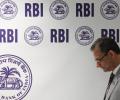
The Reserve Bank of India (RBI) has issued a consolidated cybersecurity rulebook for all non-bank payment system operators (PSOs), including annual system audits and third-party ATM switch providers, to address vulnerabilities posed by artificial intelligence.
The National Payments Corporation of India (NPCI) has deferred the implementation of a 0.4 per cent Merchant Discount Rate (MDR) on Person-to-Merchant UPI transactions above Rs 2,000. Originally set for October 15, the new date will be announced after Diwali, providing relief to users and merchants, especially during the festive season. The decision came amidst opposition concerns about the levy burdening consumers.

The National Payments Corporation of India (NPCI) has deferred the implementation of a 0.4 per cent Merchant Discount Rate (MDR) on Person-to-Merchant (P2M) UPI payments above Rs 2,000, originally set for October 15, until after Diwali.

Union Home Minister Amit Shah lauded UPI on its 10th anniversary, highlighting its role in India's digital transformation. Launched by NPCI in 2016, UPI has become the world's largest real-time payment system, witnessing a massive surge in transaction volume and value, demonstrating its success in empowering people with swift, seamless, and secure digital transactions.

India's markets regulator Sebi has launched 'Demat 2.0', a pilot project for tokenisation of corporate bonds, enabling atomic settlement through integration with RBI's wholesale CBDC. This new market infrastructure uses Distributed Ledger Technology (DLT) to make bond issuance, trading, and settlement faster and more efficient. India is the first country to issue corporate bonds natively on a distributed ledger with central bank digital currency settlement. Additionally, RBI Governor announced new UPI innovations: 'Tap & Pay' for faster POS transactions and MyUPI, an AI-powered customer support solution.
The National Payments Corporation of India (NPCI) has informed the Supreme Court that merchants are prohibited from passing on Merchant Discount Rate (MDR) charges to customers under the new UPI pricing framework. This clarification comes in response to a petition challenging the imposition of MDR on UPI person-to-merchant transactions exceeding Rs 2,000, with NPCI defending the revised framework as crucial for the sustainability of the UPI ecosystem.
Prime Minister Narendra Modi celebrated the Unified Payments Interface (UPI) completing a decade, calling it a major turning point in India's digital payment journey. Launched in 2016, UPI has become the backbone of India's digital payments ecosystem, showing exponential growth in transaction volume and value, and is a key pillar of the Digital Public Infrastructure.

Differences between President Nitin Narang and Secretary Dev A Patel have disrupted the functioning of India's chess federation.

The Unified Payments Interface (UPI) has completed a decade since its launch, becoming the backbone of India's digital payments ecosystem. It has seen exponential growth in transaction volume and value, expanding financial inclusion and setting a global benchmark for real-time payments.

The National Payments Corporation of India (NPCI) stated that the Merchant Discount Rate (MDR) "is distributed only amongst the UPI ecosystem, to further invest into infrastructure resilience, innovation, cybersecurity (protecting the UPI infrastructure with banks and non-banks) and customer service."

The Kerala Legislative Assembly has passed a motion urging the central government to completely withdraw the proposed Merchant Discount Rate (MDR) on UPI transactions exceeding Rs 2,000. Chief Minister V D Satheesan and CPI MLA K Rajan highlighted concerns that the MDR would increase business costs, harm small businesses, and reduce the appeal of digital payments, while the BJP argued it would not affect general public or small merchants.

Indian tourists can now use the Unified Payments Interface (UPI) to book tickets online for Dubai's Burj Khalifa and major attractions in Singapore, including Universal Studios. This initiative, facilitated by NPCI International Payments Ltd (NIPL) through strategic partnerships, aims to simplify international travel payments for Indians and strengthen digital and economic links with these countries.
The Indian government has mandated that banks and payment providers cannot levy charges on UPI transactions up to Rs 2,000 or on payments made via RuPay debit cards. This directive follows an amendment to the Payment and Settlement Systems Act, 2007, aiming to sustain and expand the digital payments ecosystem.
The Reserve Bank of India (RBI) has endorsed the introduction of a Merchant Discount Rate (MDR) on UPI transactions exceeding Rs 2,000, effective October 15. This move, which levies a 0.4 per cent fee on merchant payments above the threshold, aims to bolster the long-term sustainability and growth of India's digital payments ecosystem. The RBI clarified that person-to-person (P2P) transactions and small person-to-merchant (P2M) payments below Rs 2,000 will remain free for users, ensuring no direct charge on customers.
NPCI International and Uzbekistan's NIPC have partnered to enable UPI payments across Uzbekistan, allowing Indian tourists, business travellers, and students to make instant merchant payments using the UZQR code. This agreement, approved by RBI and CBU, integrates UPI with Uzbekistan's national payment system, HUMO, facilitating direct P2M payments from Indian bank accounts and reducing reliance on foreign exchange or international cards.
The NCP (SP) has demanded a complete rollback of the 0.4 per cent Merchant Discount Rate (MDR) on UPI transactions above Rs 2,000, effective October 15. The party termed the move a "direct assault" on small traders and shopkeepers, accusing the Modi government of "double standards" by burdening small merchants while large industrialists benefit from loan write-offs.

An Indian School of Business professor highlights the lack of precise data on losses from free UPI transactions, arguing that the benefits, such as user data generation, are often overlooked in the debate over implementing a Merchant Discount Rate (MDR). A recent ISB survey suggests that charging MDR could lead street vendors to revert to cash, despite the government's allowance for MDR on transactions above Rs 2,000 and NPCI's deferral of its implementation.
The government is introducing a 0.4% Merchant Discount Rate (MDR) on UPI person-to-merchant payments above Rs 2,000, effective October 15. This move ends the zero-MDR regime, aiming to fund UPI infrastructure and sustainability, as the previous government subsidy was insufficient to cover operational costs. Payments between individuals and most everyday merchant transactions will remain free.
The Payments Council of India has confirmed that Unified Payments Interface (UPI) services will continue to be free for consumers and small merchants, despite a recent Lok Sabha Bill. This clarification addresses concerns about potential charges, emphasising that while a sustainable financial model for UPI infrastructure is being developed, transaction charges will not be passed on to users or small businesses.
The All India Mobile Retailers Association (AIMRA) has announced a nationwide 'No UPI Day' protest on October 2 against the proposed 0.4 per cent Merchant Discount Rate (MDR) on UPI transactions exceeding Rs 2,000. Retailers argue that this charge will burden small businesses and impact their already thin profit margins, urging policymakers to withdraw the proposal.

Artificial intelligence major Anthropic has launched AI inference capabilities in India through Amazon Bedrock, allowing its Claude AI models to process data within the country's jurisdiction. This strategic move addresses the growing demand from Indian entities, particularly in regulated sectors, for compliance with local data processing norms as per the Digital Personal Data Protection Act. The initiative strengthens Anthropic's commitment to the Indian market, enabling secure and compliant AI deployment for sensitive workloads and fostering trust among major enterprises like Reliance, CRED, and NPCI.

India and Nepal have launched a peer-to-peer (P2P) cross-border remittance mechanism, linking India's UPI with Nepal's NPI. This system allows real-time money transfers via mobile banking, enhancing convenience for travellers and businesses, fostering financial inclusion, and strengthening economic ties between the two nations.
Parliament was informed that UPI has onboarded 55.49 crore users by June 2026, with transactions reaching 24,162 crore in volume and Rs 314 lakh crore in value in FY 2025-26. The platform, operated by NPCI, is expanding internationally through NIPL, facilitating cross-border payments and assisting other nations in building similar systems. Significant efforts are also underway by the Government, RBI, and NPCI to enhance the security and transparency of UPI transactions, including risk-based limits, security frameworks, and public awareness campaigns against cyber-crime.
The Congress party has questioned the Modi government's decision to defer the Merchant Discount Rate (MDR) on UPI transactions, alleging a potential "U-turn on the U-turn." Congress general secretary Jairam Ramesh highlighted previous denials by the finance minister regarding MDR imposition, only for it to be announced later and now deferred. He expressed concerns about future charges on UPI transactions.
The Indian government has introduced a 0.4% Merchant Discount Rate (MDR) on UPI person-to-merchant (P2M) transactions exceeding Rs 2,000, effective October 15. This move ends nearly six years of fully free UPI payments, though person-to-person (P2P) transfers and small P2M payments remain free. The charges aim to bolster investment in UPI infrastructure, with specific exemptions and caps for essential sectors.

BJD MP Santrupt Misra has voiced strong concerns over the Centre's decision to impose a 0.4 per cent Merchant Discount Rate (MDR) on UPI transactions above Rs 2,000, arguing that the government or large financial institutions could easily absorb the costs of maintaining the digital payment network instead of burdening merchants and consumers.
Zelle, a major US peer-to-peer payment service, is set to launch in India by the end of this year, marking its first international expansion. The move aims to tap into India's large remittance market, offering a service similar to UPI but integrated with bank apps. Zelle also introduced ZelleUSD, a stablecoin for future global payment capabilities.
A report by IIT Bombay suggests that the proposed Merchant Discount Rate (MDR) framework for Unified Payments Interface (UPI) transactions needs rationalisation before implementation to safeguard public trust in the digital payments system, highlighting that UPI's long-term economic benefits outweigh potential incremental income from merchant fees.

UPI processed an average 802 million transactions a day in September, about 1 per cent more than the 792 million a day over the same period in August.

Arunachal Pradesh Chief Minister Pema Khandu highlighted that the success of UPI, which handles nearly half of the world's real-time digital transactions, stems from a collaborative ecosystem including financial inclusion, digital identity, and affordable internet. He attributed this digital payments revolution to the vision of PM Narendra Modi.
The Congress party has criticised the government's recent notification regarding UPI transactions, alleging it paves the way for users to be charged fees, particularly for transactions above Rs 2,000. The party claims the government lacks transparency and questions if the move is to benefit American firms. The government, however, states that charges are necessary for the system's sustainability and infrastructure upgrades, with the Finance Minister clarifying that Merchant Discount Rate (MDR) applies to merchants, not customers.
NPCI chief Dilip Asbe stated that only about 10% of UPI transaction value might see charges passed to consumers, primarily from large corporates already absorbing credit card fees. He highlighted that 80% of Merchant Discount Rate (MDR) would come from businesses with over Rs 1,000 crore turnover, and a significant portion of transactions will remain charge-free. A new fund, potentially Rs 3,000 crore, will also be created from MDR collection to support small merchants and accelerate UPI acceptance.

The Indian government has introduced a 0.4% fee on UPI transfers above Rs 2,000 made to merchants, effective October 15, ending nearly six years of free merchant payments. This move led to initial rallies in fintech stocks like Paytm and Mobikwik, though some later pared gains. Person-to-person transactions and small payments remain free for customers, with the fee being a Merchant Discount Rate (MDR).

Shares of fintech firms, particularly Paytm, saw significant movement after the Indian government introduced a 0.4 per cent fee on UPI transfers exceeding Rs 2,000 made to merchants, effective October 15.
The Reserve Bank of India (RBI) has introduced new features for India's digital payment ecosystem, including UPI tap-to-pay for PIN-less transactions up to 5,000 and multi-currency capabilities for forex on Bharat Connect, supporting Euro, British Pound, and other major currencies.
Samajwadi Party president Akhilesh Yadav has criticised the BJP government's proposed Merchant Discount Rate (MDR) on high-value UPI transactions, calling it a "chungi" (tax) on digital payments. He alleged the move was an attempt to extract money from people's transactions, contradicting the government's goal of a trillion-dollar economy. The new UPI framework will impose a 0.4% MDR on person-to-merchant transactions above Rs 2,000 from October 15, with certain sectors having a flat Rs 5 MDR.

Finance Minister Nirmala Sitharaman has strongly refuted Opposition allegations that the decision to levy a 0.4 per cent Merchant Discount Rate (MDR) on specific UPI transactions above Rs 2,000 was influenced by external pressure. She clarified that the decision was a professional one made by the payment ecosystem, not a government imposition or a tax on consumers, with collected funds distributed among banks and UPI entities to ensure a sustainable digital payments framework.
NPCI chief Dilip Asbe stated that only about 10 per cent of the total value of UPI transactions might see charges passed to consumers under the merchant discount rate (MDR). He clarified that large corporates are expected to absorb most costs, and a significant portion of transactions will remain charge-free. A new fund from MDR collection is also proposed to boost UPI acceptance among small merchants.

A new Merchant Discount Rate (MDR) on UPI transactions above Rs 2,000, effective October 15, could force small merchants and price-sensitive consumers to revert to cash, according to economic think tank GTRI. The move, which introduces a 0.4 per cent MDR with a Rs 300 cap and concessional rates for specific categories, is questioned by GTRI founder Ajay Srivastava, who suggests it's not a revenue issue for the government but potentially a response to US pressure regarding UPI and RuPay's preferential market position.
